

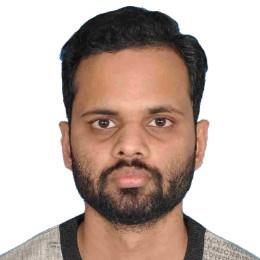
ROHIT MISHRA
Lucknow
Summary
Dynamic and dedicated professional with experience as an Assistant Professor at RR Group of Institute, skilled in Auto CAD and effective communication. Proven ability to lead teams and tackle challenges creatively, fostering a collaborative environment while delivering innovative engineering solutions. Committed to continuous learning and excellence in civil engineering.
Overview
10
10
years of professional experience
3
3
Certifications
Work History
Auto CAD User
Auto Desk
01.2016 - Current
Assistant Professor in Civil Engineering Dept
RR Group of Institute
Lucknow
08.2025 - 11.2025
Assistant Professor in Civil Engineering Dep
Naraina group of Institute
Kanpur
12.2020 - 12.2024
Intern
Rural Engineering Department
Siddharth Nagar
- Conducted a primary survey of the area, availability of space, traffic details Including motorized and non-motorized vehicles.
B-TECH Major Project
Greater Noida
- Looking to the present condition of the city, and its development the treatment of waste water generated becomes an important work. Since the pre existing treatment plant is located at a farther distance, and the load which increases day by day the pre-existing Treatment plant can't meet the desired treatment value so there is a need of Re-designing a treatment plant located near the city for better efficiency and work.
M-Tech Major Project
- Thrust Block are the concrete block with nominal reinforcement which are provided to prevent the failure of pipeline. The Thrust Block are designed for various types of bend and soil condition.
- Further a computer program is designed to calculate this area thrust block
P.hd Major Project
- Impact of various interventions on air quality improvement in Indian cities.
- The project is ongoing in Lucknow city under the supervision of Dr. Dipteek Parmar (Pro Vice Chancellor of HBTU, Kanpur).
Education
Ph.D. -
Harcourt Butler Technical University
Kanpur08-2024
M.Tech - Environmental Science & Engineering
Harcourt Butler Technical University
Kanpur11-2019
B.Tech - Civil Engineering
GALGOTIA COLLEGE OF ENGINEERING AND TECHNOLOGY
Greater Noida07-2017
Intermediate -
LITTLE FLOWER SCHOOL
Gorakhpur05-2012
High School -
LITTLE FLOWER SCHOOL
GorakhpurSkills
- Operating system: window98/2000/XP/7/8/10
- MS Office (word, excel, power point)
- Auto CAD (Civil)
- STAD PRO
- Adobe Photoshop
- Good Communication
- Mathematical Skills
- Ability to work in a team structure
- Willingness to take responsibilities
- Peaceful
- Open-minded
- Leadership Quality
- Strong willingness to learn new and innovative things
- Ability to work under pressure
- Creative
- Hard Working
Accomplishments
• Research paper 'Determination of optimum area of Thrust Block For Tee End with opposite face having same and different diameter' got selected in International Journal of Engineering and Science Invention (IJESI-2019) volume 8, Issue 7, July 2019.
• Research paper 'To calculate the optimum area of Thrust Block for Blank end with closable valves' got selected in (IJETSR-2019), Volume 6, Issue 7, July 2019.
• Research paper 'To calculate the optimum area of Thrust Block for Blank end with closable valves' got selected in (IJETSR-2019), Volume 6, Issue 7, July 2019.
Certification
Elite Certificate awarded in successfully completing the course of Air Pollution and Control by(Indian Institute Of Technology Roorkee)
Major Projects
1-Design of an Effluent Treatment Plan for any industry
Conclusion -
Category Key Result
Effluent Quality- Meets all ISO/Local Government discharge standards.
Operational Ease- High level of automation(SCADA/PLC) minimizes human error.
Sustainability-Drastic reduction in the"Water Footprint" per unit of production.
Land Footprint- Optimized layout (compact units like MBR) saves valuable industrial space.
Submitted by- Shivam Verma, Wasif Abbas Zaidi,Suneet Kumar
2-Impact of Rice Husk Ash on Concrete
Conclusion-The integration of Rice Husk Ash into concrete mixtures represents a significant advancement in sustainable construction technology. After evaluating the various experimental parameters,the following conclusions can be drawn: For standard structural applications, a 10% replacement is recommended to achieve the best balance of strength and durability. However, if RHA is processed through controlled
calcination (600°C–700°C) and fine-ground, replacement levels up to 20% can be achieved without
compromising structural integrity.
Submitted by-Siddhant Pandey, Abhishek Singh, Adarsh Kumar Pandey, Gaurav Sharma
3-Reuse of Plastic Bottles as Construction Materials
Conclusion- The utilization of PET (Polyethylene Terephthalate) bottles as a primary building component represents a viable, low-cost, and eco-friendly alternative to traditional masonry. Based on structural testing and environmental analysis, the following conclusions are reached that the reuse of plastic bottles in construction is a technically sound and socially responsible solution to the global housing and plastic waste crises. It is particularly effective for non-load-bearing walls, boundary walls, and low-cost housing in tropical climates.
Submitted by-Chandan Singh ,Nitin Kumar Singh, Ravi Shankar, Ashish Kumar
4-Geosynthetic filters in treatment of urban storm water runoff
Conclusion-The integration of geosynthetic filters into urban drainage infrastructure is a highly effective strategy for mitigating the "first flush" pollution common in metropolitan areas.Geosynthetic filters are no longer just "protection layers"; they are critical treatment components. For urban planners and engineers, the conclusion is clear: incorporating geosynthetics reduces the environmental impact of urban runoff at a lower cost and with higher reliability than traditional earthen methods. However, the success of the system is contingent upon selecting the correct (Apparent Opening Size) AOS to balance filtration with long-term flow requirements.
5-Effect of incense burning in temples.
Conclusion-"Incense Impact Study" is that unregulated burning in enclosed spaces is a public health hazard. However, by adopting natural floral-based sticks and improving airflow,temples can maintain their sacred atmosphere while protecting the health of the devotees and the integrity of the architecture.
Submitted by-Priyanshu Kumar
Timeline
Assistant Professor in Civil Engineering Dept
RR Group of Institute
08.2025 - 11.2025
Assistant Professor in Civil Engineering Dep
Naraina group of Institute
12.2020 - 12.2024
Auto CAD User
Auto Desk
01.2016 - Current
Intern
Rural Engineering Department
B-TECH Major Project
M-Tech Major Project
P.hd Major Project
Ph.D. -
Harcourt Butler Technical University
M.Tech - Environmental Science & Engineering
Harcourt Butler Technical University
B.Tech - Civil Engineering
GALGOTIA COLLEGE OF ENGINEERING AND TECHNOLOGY
Intermediate -
LITTLE FLOWER SCHOOL
High School -
LITTLE FLOWER SCHOOL