

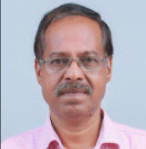
Titus K Mathew
Professor (retired)
NRA 42, Peroorkada, Thiruvananthapuram
Summary
Dynamic educator with extensive experience at Cochin University of Science and Technology, specializing in curriculum development and student mentoring. Proven ability to enhance student engagement through innovative teaching methods and critical thinking. Committed to fostering academic excellence and collaboration, while successfully managing research projects and performance evaluations. Served as the Chairman of the Board of studies of both UG and PG Board of studies. Also served as the Honorary Director of (i) Center for Particle Physics, CUSAT, (ii) ICARD (IUCAA Center for Astronomy Research and Development, (iii) Inter University Center for the Studies of the Kerala Legacy on Astronomy and Mathematics (IUCKLAM).
Overview
28
28
years of professional experience
Work History
Professor
Cochin University of Science and Technology
09.2007 - 05.2024
- Developed and delivered innovative curriculum aligning with academic standards and industry trends.
- Mentored junior faculty, enhancing teaching methodologies and fostering professional growth.
- Conducted research projects, contributing to advancements in scientific knowledge within specialized fields.
- Evaluated student performance through comprehensive assessments, ensuring academic integrity and rigor.
Head, Department of Physics, CUSAT
Cochin University of Science
07.2020 - 07.2023
- Developed and delivered engaging curricula aligned with educational standards.
- Facilitated collaborative learning environments to enhance student participation.
- Implemented innovative teaching methods to improve student comprehension and retention.
- Self-motivated, with a strong sense of personal responsibility.
- Worked well in a team setting, providing support and guidance.
- Assisted with day-to-day operations, working efficiently and productively with all team members.
- Worked flexible hours across night, weekend, and holiday shifts.
- Proved successful working within tight deadlines and a fast-paced environment.
Senior Lecturer in Physics
Collegiate Education Department, Govt. of Kerala
12.1996 - 08.2007
- Teaching both undergaduate, graduate and Postgraduate levels.
- Excellent communication skills, both verbal and written.
- Self-motivated, with a strong sense of personal responsibility.
- Worked effectively in building the curriculam syllabi
- Skilled at working independently and collaboratively in a team environment.
- Motivating studnets into more learning and research
Chairman UG Board of Studies, CUSAT
Cochin University of Science and Tecnology
07.2019 - 06.2023
- Formulate the Curriculum and Syllabi for the UG programs in Physics, Statistics, Chemistry.
- Led strategic initiatives to enhance academic programs and research capabilities.
Chairman, PG Board of Studies, CUSAT
Cochin University of Science and Technology
07.2022 - 06.2024
- Device the Curriculum and Syllabi for the M.Sc (Physics) program of CUSAT.
- Led strategic initiatives to enhance academic programs and research capabilities.
Honorary Director, Center of Particle Physics
Cochin University of Science and Technology
08.2016 - 05.2024
- Directed research projects, fostering collaboration in Particle Physics among Indain and Abroad Institutions.
- Attract funded projects from Indian and Abroad funding agencies.
- Tow megaprojects in Collaboration with FERMI lab US, each funded by DST, Govt. of India were implimented.
Honoraray Director, IUCKLAM
Cochin University of Science and Technology
08.2017 - 05.2024
- Led strategic initiatives to enhance academic programs and research capabilities related to study of the legacy of Kerala on Astronomy and Mathematics
- Popularise the ancient history of Astrony and Mathematics of Kerala among the Students of Kerala.
- Implemented projects funded by KSCSTE, Govt. of Kerala
Coordinator, ICARD
Cochin University of Science and Technology
08.2018 - 05.2024
- ICARD - IUCAA Center for Astronomy Research and Development
- Coordinated academic schedules and events, related to the astronmy research in collaboration with Inter University Center for Astronomy and Astrophysics, Pune.
- Implemented invited talks, Workshops, Conferences in Astronomy and Astrophysics, in collaboration with IUCAA.
Coordinator, TPSC
DST Govt. of India and CUSAT
08.2016 - 05.2024
- TPSC - Theoretical Physics Seminar Circuit Program
- TPSC is meant for availing the esteemed experts form institutions across the country for invited lectures and initiating academic collaboration. The program is fnded by DST, Govt. of India.
- Conducted Invited Lecture in many areas of theoretical Physics by expert faculties from reputed institutions across the country.
Education
Ph.D. - Theoretical Physics
Cochin University of Science And Technology
Kochi, India 04.2001 -
Master of Science - Physics
Cochin University of Science And Technology
Kochi, India 04.2001 -
Bachelor of Science - Physics, Mathematics, Chemistry
Mar Ivanios College Thiruvananthapuram, Kerala University
Thiruvananthapuram, India 04.2001 -
Skills
Critical thinking
Team leadership
Student mentoring
Course planning
Curriculum creation
Mentoring students
Data analysis
Online teaching
Classroom management
Public speaking
Curriculum development
Student-centered learning
Lectures and discussions
Peer collaboration
Grading and reporting
Performance evaluations
Student assessments
Powerpoint presentations
Mentoring
Group discussions
Academic publication
Project management
Motivation
Academic advising
Research writing
Academic advisory
Online class discussion
Timeline
Chairman, PG Board of Studies, CUSAT
Cochin University of Science and Technology
07.2022 - 06.2024
Head, Department of Physics, CUSAT
Cochin University of Science
07.2020 - 07.2023
Chairman UG Board of Studies, CUSAT
Cochin University of Science and Tecnology
07.2019 - 06.2023
Coordinator, ICARD
Cochin University of Science and Technology
08.2018 - 05.2024
Honoraray Director, IUCKLAM
Cochin University of Science and Technology
08.2017 - 05.2024
Honorary Director, Center of Particle Physics
Cochin University of Science and Technology
08.2016 - 05.2024
Coordinator, TPSC
DST Govt. of India and CUSAT
08.2016 - 05.2024
Professor
Cochin University of Science and Technology
09.2007 - 05.2024
Ph.D. - Theoretical Physics
Cochin University of Science And Technology
04.2001 -
Master of Science - Physics
Cochin University of Science And Technology
04.2001 -
Bachelor of Science - Physics, Mathematics, Chemistry
Mar Ivanios College Thiruvananthapuram, Kerala University
04.2001 -
Senior Lecturer in Physics
Collegiate Education Department, Govt. of Kerala
12.1996 - 08.2007
Research
Ph.D. in the area of Cosmology. The PhD work is related to synthesis of light elements like Hydrogen, Helium, Lithium etc in the early universe.
Currently broad area of research is Gravitation and Cosmology. Published more than 50 research papers in internationally reputed journals. Supervised around 11 students for their Ph.D. degree. Currently supervising 3 students for their doctorate degree.
Major fields of working are: Understanding the Recent the acceleration in the expansion of our Universe and Dark Energy in the universe. Explaining the recent acceleration and also the early inflationary Universe using bulk viscosity dissipative effects in Dark Matter and ordinary Baryonic Matter. Understanding the thermodynamic connection of Gravity and study the mergent nature of Gravity. Aanlsyze the expansion expansion of the universe using the emergent nature of Gravity and also Space. The following are short list of my best research publications.
1. Vishnu A Pai and Titus K Mathew, "Cosmology with a nonlinear barotropic Israel-Stewart fluid with causal relaxation time", Published in Phys.Rev.D 113 (2026) 6, 063560, e-Print: arXiv:2512.16502 [gr-qc]
2. Vishnu A Pai, Sarath Nelleri and Titus K Mathew, "Dissipative ΛΛCDM model with causal sign-switching bulk viscous pressure", Published in: Eur.Phys.J.C 85 (2025) 5, 593, e-Print:arXiv:2409.10919 [astro-ph.CO]
3. Vishnu S Namboothiri, Krishna P B, Adthya P S and Titus K Mathew, " Evolution of fluctuations in horizon energy and its dependence on the degrees of freedom", e-Print: arXiv:2408.09771 [gr-qc]
4. Rosemin John, Sarath N, and Titus K Mathew, "Thermal evolution and stability analysis of phenomenologically emergent dark energy model" Published in: Eur.Phys.J.C 83 (2023) 8, 697, e-Print: arXiv: 2301.12172 [gr-qc]
5. Hassan Basari V T, Krishna P B, and Titus K Mathew, "Unified formalism for the law of emergence from the first law of thermodynamics", Published in: Phys.Rev.D 107 (2023) 6, 063511, e-Print:arXiv: 2209.00304 [gr-qc]
6. Krishna P B, Hassan Basari, and Titus K Mathew, "Emergence of cosmic space and its connection with thermodynamic principles", Published in: Gen.Rel.Grav. 54 (2022) 6, 58, e-Print:arXiv: 2205.14868 [gr-qc]
7. Sarath N, and Titus K Mathew, " Running vacuum model versus ΛCDM – a Bayesian analysis", Published in:Mon.Not.Roy.Astron.Soc. 510 (2022) 4, 5553-5559, e-Print: arXiv: 2105.03084 [gr-qc]
8. Hareesh T, Krishna P B, and Titus K Mathew, "First Law of Thermodynamics and Emergence of Cosmic Space in a Non-Flat Universe", Published in: JCAP 12 (2019) 024, e-Print: arXiv:1908.03349 [gr-qc]
9. Krishna P B, and Titus K Mathew, "Entropy maximization in the emergent gravity paradigm", Published in:Phys.Rev.D 99 (2019) 2, 023535
e-Print: arXiv:1805.01705 [gr-qc]
10. Krishna P B, and Titus K Mathew, "Holographic equipartition and the maximization of entropy", Published in:Phys.Rev.D 96 (2017) 6, 063513
e-Print: arXiv1702.02787 [gr-qc]
11. Athira Sasidharan, and Titus K Mathew, "Bulk viscous matter and recent acceleration of the Universe", Published in: Eur.Phys.J.C 75 (2015) 7, 348
e-Print:arXiv: 1411.5154 [gr-qc]
12. Titus K Mathew, Aswathy M B, and Manoj M, "Cosmology and thermodynamics of FLRW universe with bulk viscous stiff fluid", Published in: Eur.Phys.J.C 74 (2014) 99, 3188, e-Print:arXiv: 1406.2089 [gr-qc]
Membership and Service in Professional organisations/Panels
1. Member of the Editorial Board of the Journal, "Scientific Reports" by Nature for 2025
2. Life Member of IAGRG - Indian Association for General Relativity and Gravity
3. Life Member of ISQG - International Society for Quantum Gravity
4. Visiting Associate of IUCAA - Inter University Center for Astronomy and Astrophysics
5. Member of ISDT - International Science Development Team of TMT (Thirty Meter Telescope), Hawai, USA.
6. Served as the president of APT - Academy of Physics Teachers for two consecutive period form 2018-2022
Ph.Ds Superviced
Successfully Supervised 11 students for Ph.D. in the Department of Physics, Cochin University of Science and Technology. A List is given below. Currently three students are working under my supervision for Ph.D.
1. Praseetha P - thesis title - “Studies on Holographic Ricci Dark Energy”. - March 2016
(Currently Working as Assistant Professor in Educational Institution)
2. Athira Sasidharan – thesis title - “Bulk viscous matter and recent acceleration of the
Universe” - Nov. 2019
(Currently working as Assistant Professor in an Educational Institution)
3. Rajagopalan Nair – thesis title - “Studies on accelerating universe with bulk viscous
Zeldovich fluid” - Feb 2020
(Free Lance Educational Consultant)
4. Dintomon Joy - “Studies in Quantum Computation and Quantum Cryptography.” - Feb
2021
(Working as Assistant Professor in an Educational Institution)
5. Paxy George - “Studies on holographic running vacuum model of the late accelerating
universe” - Nov. 2021
(Working As Assistant Professor)
6. Krishna P B - “Emergence of cosmic space and the thermodynamics of horizons.” Dec
2021.
(Workinga as Assistant Professor in St. Albert's College, Ernakulam, India)
7. Jerin Mohan N D - “Full causal and truncated viscous models for the recent acceleration
of the universe.” - Feb 2022
(Working as Assistant Professor in NFSU - National Forensic Sciences University - Goa, India)
8. N Sarath - “Running cosmic vacuum and recent acceleration of the universe’ - Feb 2023
(Educational Consultant and AI Trainer)
9. Hasan Basari – “Emergence of Cosmic space: A unified Approach” – April 2025.
(Working as Assistant Professor)
10. Manosh T M – “Holographic Dark energy and recent acceleration of the universe:
Insights from horizon thermodynamics.” - November 2025.
(Post Doctoral Fellow in IIA - Indian Institute of Astrophysics, Bangalore, India)
Projects Undertaken
Four projects were undertaken by me, 2 minor and 2 Mega projects. The Major projects are listed below.
1. Indian Institutions Collaboration with Fermi Lab on Neutrino Physics” project
under DST, Govt. Of India. - worth Rs. 1.4 crore - 2016-2020 - Co-investigator
2. Indian Institutions Collaboration with Fermi Lab on Neutrino Physics” project
under DST, Govt. Of India. - worth Rs. 1.4 crore – 2020-2025. - Principal Investigator
M.Sc./M.Phil. Supervised.
About 50 M.Sc./M.Phil. projects are supervised by me with students form across Kerala India. A selected List is given below.
1. 2012, Jishnu Suresh , CUSAT; " Modified holographic Ricci dark energy model and statefinder diagnosis in flat universe" - Published in Int.J.Mod.Phys.D
2. 2013 Vidya K Soman, CUSAT, "Entropy of the Friedmann Universe with Matter & Cosmological Constant and Generalized Second Law", - Published in Eur.Phys.J.C 73 (2013) 2619
3. 2014 Aswathy M B, CUSAT, "Entropy of the Event Horizon of a Friedmann Universe with Radiation & Cosmological Constant and Generalized Second
Law", Published in Eur.Phys.J.C 74 (2014) 99, 3188
4. 2015 Chintak Murali, Dept. Of Physics, CUSAT, "A Study on the Evolution of the Universe and its Phantom Nature under Entropic Acceleration", Published in: Mod.Phys.Lett.A 31 (2016) 12, 1650071
5. 2018 Mahith M , Dept. Of Physics, CUSAT, "Expansion Law of the Universe from First Law of Thermodynamics", Published in: JCAP 12
(2018) 042
6. 2019 Hareesh T , Dept. Of Physics, CUSAT, "Emergence of Cosmic Space and First Law of Thermodynamics at the Apparent Horizon", Published in JCAP 12
(2019) 024
7. 2022 Muhsinath M , CUSAT, "Modified expansion law with Kodama–Hayward temperature for the horizon", Published in: Gen.Rel.Grav. 55 (2023)
2, 43
8. 2022 Rosemin John, Dept. Of Physics, CUSA, " Thermal evolution and stability analysis of PEDE model", Published in: Eur.Phys.J.C 83 (2023) 8, 697
Invited Lectures
I have given invited Lectures to many national and International workshops/conference. A list of few are given below:
1. “On the Emergence of Gravity”, CONFERENCE ON CLASSICAL AND QUANTUM
GRAVITY, Nov 5-7, 2024, Department of Physics, CUSAT.
“Law of Emergence and Cosmology”, Workshop on Emergent Gravity, Sept. 1-3, 2019,
Department of Physics, CUSAT
3. “Third revolution in Gravity – Thanu Padmanbhan’s contribution”, Science People,
Light-ways Science Talk 33, October 3, 2021.
4. “Gravity – From Einstein to Padmanbahn”, National Seminar on Astronomy and
Astrophysics, School of Pure and Applied Physics, M G University, Kottayam, 22-23,
March 2022.
5. “Emergent paradigm: A novel perspective to Gravity and Cosmology”, NATIONAL
CONFERENCE ON THEORETICAL PHYSICS, Maharajas College, Ernakulam,
JANUARY 30-31, 2025
Outline of future Research Plan
Emergent Gravity:
Can hotness of the spacetime, implies a non-zero curvature at the macroscopic levely?
Stephen Hawking’s discovery that black holes radiate like thermal objects \cite{Hawking1} first
revealed a deep connection between gravity and thermodynamics. This idea was later strengthened
by Ted Jacobson \cite{Ted1}, who derived Einstein’s field equations from the Clausius relation of
thermodynamics by applying it to a local Rindler horizon. Supporting this viewpoint, Unruh and
Davies \cite{Unda} showed that the horizon perceived by an accelerating observer in flat spacetime
is also associated with a temperature.
The most comprehensive link between gravity and thermodynamics was established by Thanu
Padmanabhan \cite{paddy1}, who demonstrated that Einstein’s field equations can be written as a
thermodynamic identity for any spacetime with spherical symmetry. Building on this insight, he
proposed that gravity itself is an emergent phenomenon arising from the thermodynamic behavior
of spacetime. He further suggested that spacetime must possess an underlying microscopic structure
- “atoms of space” \cite{paddy2} - in order to store heat and exhibit thermal properties.
The thermodynamics of the microscopic structure of spacetime appears as spacetime curvature at
the macroscopic level. This thermodynamic link to gravity raises an important question: does the
hotness of spacetime itself imply curvature? This remains an open problem. Dawood et al. \
cite{Dawood1} have shown that the hotness of spacetime can imply the presence of a cosmological
constant. We hope that their work can be extended to address this broader question.
Emergent Space:
Cosmological model based on emergence of cosmic space and a possible solution to the
cosmological constant problem.
Following the concept of emergent gravity, Padmanbhan took a further step to postulate that the
space itself can be of emergent nature. It is very diffficult to consider time as being emergend from
some more fundamental entities, as it parametrises the dynamics of any system. But this has got a
solutin in the osmological scenario, where all fundamental observers possess the same time with
respect to which the CMBR is having the same temperature. Hence it is possible to bifucate
between the cosmic space and time. This lead to the idea that, the cosmic is emergeing with the
progress of cosmic time. A fundamental was tne proposed, by Padmanbhan, which state that, the
evolution of the Hubble volume of the universe is caused by the holgraphic descrepancy, (N_{surf}-
N_{bulk}), where N_{surf} is the degrees of freedom o the horizon and $N_{bulk}$ is degrees of
freedom of the gravitating matter residing within the Hubble volume. The principle naturally leads
to the Friedmann equations, the conventional equations describing the expansion of the unverse.
Our aim is the contruct a comsological model, based the fundamental principle, the law of
emergence proposed by Padmanbahan. The importance of creartng such a model is its anticipated
ability to predict the entire evolution of the universe from the early inflatonary epoch to the late
acceleraed epoch. Using such a model we can connect these two de Sitter epochs – the early de
Sitter epoch of inflation and end de Sitter epoch of late acceleration. This connection can be enabled
through using the number of comological modes which are crossing the Hubble horizon at various
epochs of the universe. This will in turn give a natural method to determine the magnitude of the
cosmological constant which causes the late accelerated epoch. Since there exists a huge disparity
between the observed and predicted values of the cosmological constant, we believe the current
approach can become a potential window to solve the issue.
Dark Energy Models:
Thermodynamic evolution of the “runnind vacuum dark energy model”, and evolution of the
primordial perturbation in this model. An alternative way to address the cosmological constant problem is to consider varying dark
energy models, where the dark energy has a large value in the early universe and gradually
decreases as the universe expands. In our recent work \cite{..}, we proposed a modified version of
the running vacuum model of dark energy. In this model, the equation of state of dark energy
remains the same as that of the cosmological constant, but its energy density decreases with
cosmic expansion.
We now plan to study the thermodynamic evolution of this model to further test its viability.
Specifically, we will examine whether the first and second laws of thermodynamics hold in this
framework and whether the model leads to entropy maximization, particularly of the horizon
entropy, so that the final de Sitter phase can be regarded as a stable state. We will also analyze the
evolution of density fluctuations within this model.
F(R) models of gravity and Emergence of cosmic space
Padmanabhan’s law of emergence explains the expansion of the universe as the emergence of
cosmic space. This idea has been extended to other gravity theories such as Gauss–Bonnet and
Lovelock gravity\cite{..}. The key step in these extensions is defining the surface degrees of
freedom on the horizon, which requires a clear definition of entropy. Once the entropy expression is
known, the law of emergence can be derived directly from the thermodynamic identity TdS=dE.
However, in modified gravity theories, this thermodynamic relation takes a new form:
TdS+diS=dE,
where diS represents the dissipative entropy produced within the horizon. A prominent example of
such a modified theory is F(R) gravity. Determining diS in this case is challenging, mainly because
it is difficult to apply Jacobson’s integral relation directly to F(R) gravity.
Our approach is to first obtain the effective Friedmann equations by varying the corresponding
action and combining the result with the Friedmann–Lemaître–Robertson–Walker (FLRW) metric
for an expanding universe. It is also possible to derive the Friedmann equations from the
thermodynamic identity TdS=dE. By comparing both forms, we aim to identify the additional term
diS, which represents the entropy generated due to the dissipative effects of higher-order curvature.
Once this term is evaluated, we can then construct a consistent expression for the surface degrees of
freedom Nsurf. This will lead to the general form of the law of cosmic expansion.
After establishing this law, we can develop a cosmological model that describes the full
evolution of the universe—from the early inflationary epoch to the present late-time
acceleration. Since F(R) gravity naturally accounts for the early inflationary phase, adding
a cosmological constant allows the model to reproduce the complete cosmic evolution.
Moreover, this framework can be used to estimate the magnitude of the cosmological
constant by connecting the early and late de Sitter epochs through the number of
cosmological modes crossing the Hubble horizon.